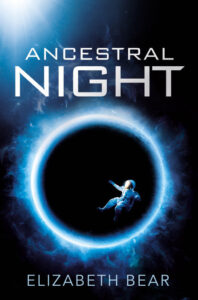
I usually don’t get around to reading the Hugo finalists for Best Series—I read a lot, but not that much—but having previously read all the Best Novel finalists left me with a little extra time, so I decided to do a little sampling (yes, this review has been in drafts for a minute, don’t judge). The series that most stood in it in the initial setup was Elizabeth Bear’s White Space, and I took the opportunity to try out the opening book, Ancestral Night, in its entirety.
Ancestral Night is firmly in the space opera category, starring one of the two humans in a salvage trio and picking up the action just before they happen on an abandoned ship that will change all of their lives. The encounter leaves the cast with a potentially high-value score that’s logistically challenging, a group of pirates hot on their tail, a few big questions about the mysteries of the universe, and a new addition that raises as many questions as it answers. Meanwhile, the ship’s AI is being called away for compulsory political service, and the lead’s troubled history is returning with a vengeance. Like I said, firmly a space opera. There’s a lot of intrigue, and I was excited to see how it would develop through the course of the book.
It’s a long book, and veteran genre readers will anticipate a few of the developments, but Bear does a pretty good job keeping it engaging and motivating the inevitable mistakes leading up to the climax. The search for answers keeps the first half of the story going, with an early refueling stop filling out the cast with a handful of secondary characters who will grow into key figures in the story. After the midway climax dramatically alters the lay of the land, the focus shifts from seeking answers to big questions on a galactic scale to more personal ones about the lead’s history and the circumstances behind her memory alterations.
The whole concept of psychological alteration introduces a fascinating topic for exploration, and it’s vital to the development of the story, especially in the back half. But the radicalism of the primary opposing voice tends to run roughshod over some of the more nuanced elements of the topic. To be clear, the nuances remain, and said dissenting voice is certainly not held up as a shining example of thematic engagement, but when you’re exploring a society where most people have automated systems constantly adjusting their brain chemicals (and sometimes memories!), the most compelling critiques probably won’t come from those people who object to the use of mood-stabilizers full stop.
Much like with the thematic exploration, the plot also introduces potentially fascinating elements and only goes so far with them. It’s entertaining as a space opera, it generally maintains the tension, and it delivers an ending that closes enough plot threads to make it satisfying as a standalone. On the other hand, the action-packed finish doesn’t raise the level of the story to that point, and the overall book doesn’t ever do enough to stand apart from the crowded genre landscape. As space operas go, it’s entertaining, but it’s never jaw-dropping.
Recommended if you like: space opera, enemies that hang around far too long.
Overall rating: 14 of Tar Vol’s 20. Four stars on Goodreads.